Seven out of ten shoppers leave before they pay.
That is not a Malaysia-specific problem. It is close to universal, per Baymard Institute’s aggregate of dozens of cart abandonment studies, which puts the average online cart abandonment rate close to 70%. Most of that revenue is not gone. It is sitting in an inbox, waiting for the right email.
| ~70% | 5–15% | 2–3 |
| Average cart abandonment rate (Baymard Institute research aggregate) | Carts recovered by email sequences (Klaviyo 2024 Ecommerce Benchmarks) | Emails in a standard recovery sequence (Klaviyo, Omnisend flow templates) |
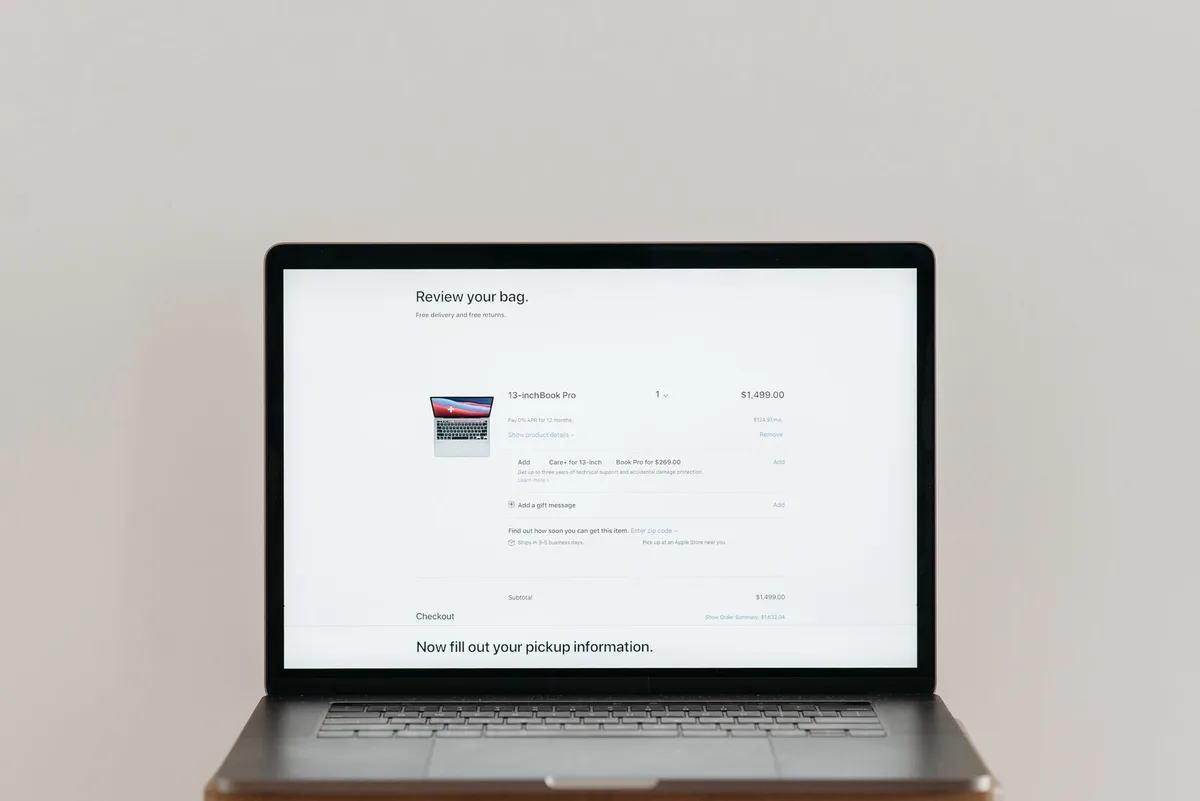
What Is an Abandoned Cart Email and How Does It Work?
An abandoned cart email is an automated message triggered when a shopper adds items to their cart, reaches checkout, and leaves without completing payment. It uses the email address captured at checkout to remind the shopper what they left behind, and typically includes the product, a return link, and (later in the sequence) an incentive to finish the order.
The mechanic is simple. Your store platform tracks a checkout session tied to an email address. If no payment confirms within a set window (usually 1 hour), the automation fires. No manual work, no ad spend, no new traffic required. The shopper already found your product and started to buy it. The email just closes the gap.
This only works on a store where the customer enters their email before payment: Shopify, WooCommerce, or a standalone checkout. It fits into the broader email marketing channel guide for Malaysian ecommerce sellers as the single highest-converting automated flow most stores can build.
Why Do Shoppers Abandon Carts Before Checkout?
The most common reasons shoppers abandon carts are unexpected costs at checkout (shipping, taxes, fees), a checkout process that requires account creation, and simple distraction: the shopper meant to come back and forgot. None of these mean the shopper lost interest in the product.
Knowing the reason shapes the fix, and most causes have nothing to do with your product.
Unexpected costs. A shopper adds an item priced at RM 89, gets to checkout, and sees RM 15 shipping added on top. That gap between expected and actual price is one of the most cited abandonment triggers in ecommerce research. Showing shipping cost earlier (on the product page or cart page, not first at checkout) reduces this.
Forced account creation. Requiring a full account signup before checkout adds friction at the exact moment a shopper is closest to paying. A guest checkout option, with account creation offered after payment, removes that barrier.
Genuine distraction. A notification, a phone call, a closed laptop lid. The shopper intended to buy and didn’t decide against it. They just left. This is the group abandoned cart email recovers best, because no objection needs to be overcome. Just a reminder.

How Many Abandoned Cart Emails Should You Send, and When?
Two to three emails spaced over roughly three days is the standard sequence. Send the first within 1 hour of abandonment for the highest open rate, the second at 24 hours as a stronger reminder, and an optional third at 48–72 hours with a discount for shoppers who still haven’t converted.
Timing matters more than most sellers assume. Send too late and the shopper has already bought elsewhere or lost the urge; send every email at once and it reads as spam.
Email 1: within 1 hour. A plain reminder. Product image, name, price, a single button back to checkout. No discount. Most shoppers who convert off this email were already going to buy. They just needed the nudge.
Email 2: at 24 hours. Slightly stronger. Add a line addressing a common objection (free returns, secure payment, delivery time) and reinforce the product’s value.
Email 3: at 48–72 hours, optional. For shoppers who haven’t converted after two reminders, a discount of 10–15% or a flat RM 10–20 off can close the gap for price-sensitive buyers. Don’t lead with a discount in email 1. It trains shoppers to abandon carts on purpose to trigger a coupon.
Not sure if your current cart recovery setup is actually working? Run a quick check on your abandoned cart flow, open rates, and recovery revenue with the free StoreFuel marketing audit. 5 minutes. Free. No pitch.
Which Platforms Support Abandoned Cart Emails for Malaysian Sellers?
Shopify Email includes a free, built-in single-email abandoned checkout automation on every plan. WooCommerce requires a plugin such as CartFlows or AbandonedCartLite. For a full multi-step sequence with discount logic, Klaviyo and Omnisend both offer dedicated abandoned cart flow templates on their paid plans.
Platform choice depends on how much control you need over the sequence.
Shopify Email (free). Built into every Shopify store under Marketing → Automations. Sends one reminder email automatically. Good enough for a store just starting out, limited if you want a 3-email sequence with an escalating discount. See the full setup in our Shopify email marketing guide.
WooCommerce. No native abandoned cart tracking. Requires a plugin (CartFlows, AbandonedCartLite, or a connected ESP) to capture the checkout session and trigger emails. See our guide to customizing WooCommerce emails for setup detail.
Klaviyo and Omnisend (paid). Both include pre-built, multi-step abandoned cart flows with conditional logic: different messaging for first-time versus repeat shoppers, different timing for high-value carts. Omnisend’s plans start around RM 72–80 per month for up to 500 contacts; Klaviyo is priced higher but adds predictive segmentation. Compare both in our Omnisend vs Klaviyo breakdown.
Shopee and Lazada: not possible. Neither marketplace shares buyer email addresses with sellers. There is no way to trigger a recovery email for a cart abandoned on Shopee MY or Lazada MY. This is one of the clearest reasons sellers who scale past marketplace-only selling move some volume to their own store.
What Should an Abandoned Cart Email Subject Line and Copy Include?
Effective abandoned cart subject lines name the product or reference the cart directly, avoid generic phrases like “come back,” and stay under 50 characters so they don’t truncate on mobile. The email body should include a product image, one clear call-to-action button, and (by the second or third email) a specific reason to return.
Copy that converts is specific, not clever.
Subject line. “You left [Product Name] in your cart” outperforms vague hooks like “Don’t forget something?” because it tells the shopper exactly what’s waiting, before they open the email. Keep it under 50 characters. Most mobile inboxes truncate longer lines.
Body. One product image, the price, and a single button labeled “Complete your order” or “Return to cart”, not multiple competing links. Add one line of social proof or a returns policy reminder in email 2. Save the discount code, if used, for email 3, stated clearly with an expiry date to create urgency without sounding desperate.
Mobile formatting. Most Malaysian ecommerce traffic is mobile. Keep the email single-column, button large enough to tap, and load time fast. A heavy image-only email loses shoppers before they scroll.
How Do You Measure Abandoned Cart Email Performance?
Track three numbers: open rate (aim for 40%+, since these are high-intent triggered emails), click-through rate on the return-to-cart button, and recovery rate: the share of abandoned carts that convert after the email sends. Most platforms, including Shopify Email, Klaviyo, and Omnisend, report all three natively per automation.
Abandoned cart emails should outperform your regular campaigns on every metric, because the recipient already showed buying intent.
Open rate. Should sit meaningfully higher than your newsletter open rate. These are triggered by an action, not a broadcast. If your abandoned cart open rate is close to your general campaign rate, your subject lines aren’t differentiated enough.
Recovery rate. The number that matters for revenue. Compare it against the 5–15% benchmark from Klaviyo’s 2024 Ecommerce Benchmarks report. Consistently below that range signals a timing, copy, or discount-threshold problem worth testing.
Revenue recovered. Multiply recovered carts by average order value to see the actual ringgit impact. A store recovering 8% of 150 monthly abandoned carts at an RM 120 average order value recovers roughly RM 1,440 a month, from a flow that runs on autopilot once built.

Check these numbers monthly. A recovery rate that drifts down over a few months usually means checkout friction changed (a new shipping fee, a longer load time), worth investigating on the cart and checkout pages themselves, not just the email.
Frequently Asked Questions
What is a good abandoned cart email recovery rate?
5–15% of abandoned carts, per Klaviyo’s 2024 Ecommerce Benchmarks report. A store with 200 abandoned carts a month recovering at the low end of that range wins back roughly 10 orders it would have otherwise lost, without any additional ad spend.
How many abandoned cart emails should I send?
Two to three emails, spaced over roughly three days, is the standard sequence used in Klaviyo and Omnisend’s pre-built flow templates. The first email sends within 1 hour of abandonment for the highest open rate, the second follows at 24 hours, and an optional third with a discount sends at 48–72 hours.
Should I offer a discount in abandoned cart emails?
Not in the first email. Send it as a reminder only. If the cart is still unrecovered by email two or three, a discount of 10–15% or a flat RM 10–20 off can push a price-sensitive shopper to complete checkout, per common flow templates from Klaviyo and Omnisend.
Can I send abandoned cart emails to Shopee or Lazada customers?
No. Shopee and Lazada do not share buyer email addresses with sellers, so there is no way to trigger a cart recovery email on those marketplaces. Abandoned cart email only works on a store you control (Shopify, WooCommerce, or a standalone checkout) where the customer enters their email before payment.
Which platform is best for abandoned cart emails on a small budget?
Shopify Email is free on every Shopify plan and includes a built-in single-email abandoned checkout automation, the lowest-cost starting point. For a multi-step sequence with discount logic, Omnisend’s paid plans start around RM 72–80 per month for up to 500 contacts.
Keep Reading
- Shopify Email Marketing: The Complete Setup Guide for Malaysian Sellers
- Email Marketing for Malaysian Ecommerce Sellers: The Complete Channel Guide
- Omnisend vs Klaviyo: Which Email Marketing Tool Should Malaysian Ecommerce Sellers Use?
- Best Email Marketing for Shopify: Top 5 Tools Compared for Malaysian Sellers